AOG
Aircraft on Ground
Highest-priority airfreight service for urgent aircraft spare parts needed to return a grounded aircraft to service.

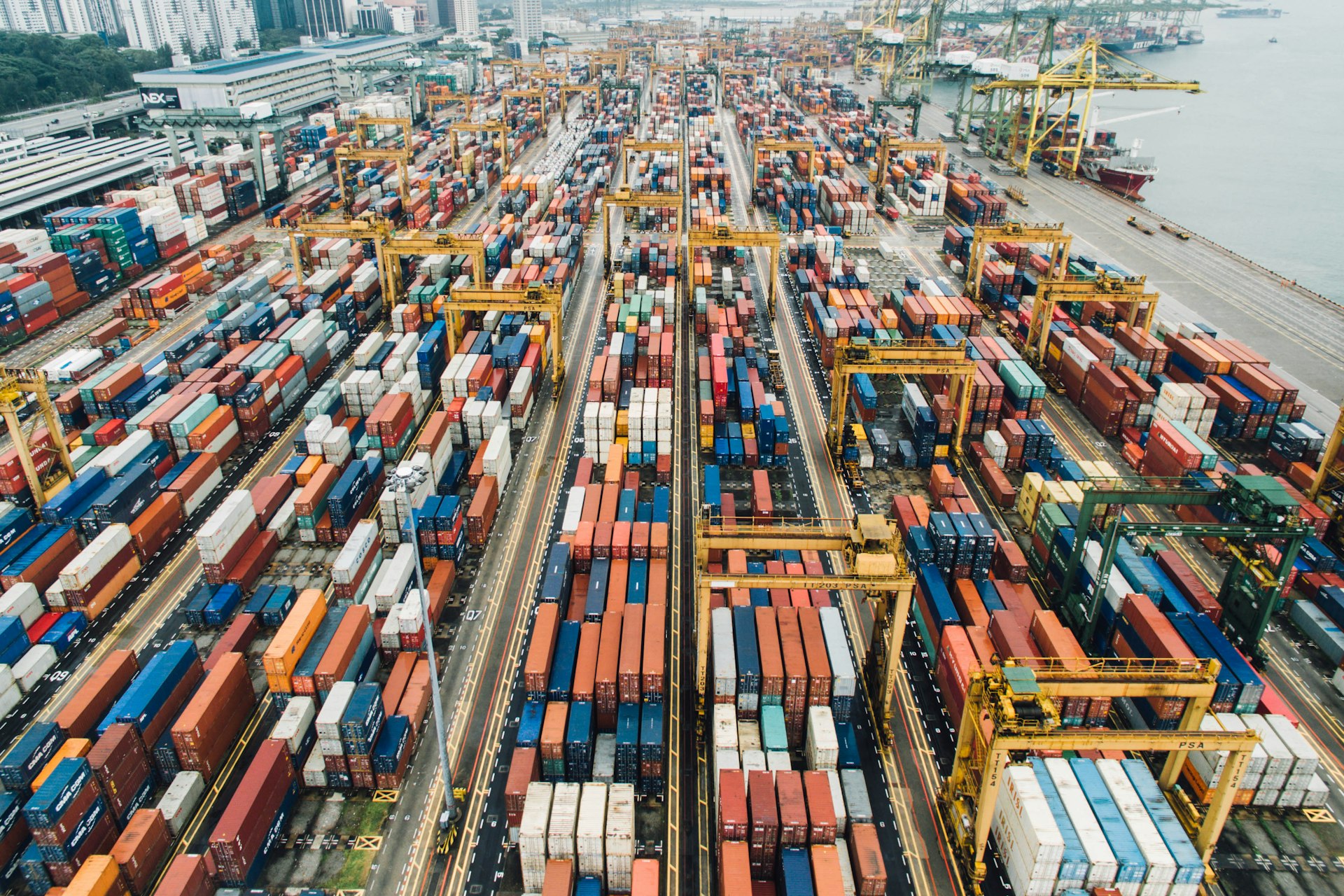
An industry glossary of the key terms, abbreviations and jargon used in international freight forwarding, customs and warehousing.
Highest-priority airfreight service for urgent aircraft spare parts needed to return a grounded aircraft to service.
The transport document issued for airfreight consignments. Serves as a receipt, a contract of carriage, and a description of the goods — but is not a document of title.
The ocean transport contract issued by the carrier. Acts as receipt of goods, carriage contract, and document of title — meaning it can be endorsed to transfer ownership of the cargo.
A surcharge added to ocean freight rates to compensate for fluctuations in marine fuel (bunker) prices.
A secure facility approved by NZ Customs where imported goods can be stored without paying duty or GST until they are released for the local market.
A licensed professional who prepares and lodges customs entries and clearance documents on behalf of importers and exporters.
A surcharge covering currency exchange volatility, typically applied to ocean freight rates quoted in a base currency (usually USD).
The standard unit of volume in freight forwarding — one metre × one metre × one metre. Used to compute LCL and Airfreight chargeable weight.
A facility where LCL cargo from multiple shippers is consolidated into (or de-consolidated from) shared containers.
The greater of a shipment's actual gross weight and its volumetric weight — this is what carriers actually bill you for.
The party named on the transport document as the receiver of the goods at the destination.
The party who sends the shipment — usually the seller or exporter.
Combining multiple smaller shipments from different shippers into a single, larger consignment (typically a full container or air ULD) to reduce cost.
The port area where full containers are stacked awaiting loading, discharge, or collection.
A charge levied by the carrier when a full container is not picked up from the port/terminal within the allowed free days.
A charge levied when a container is kept beyond the free days after being picked up — i.e. not returned empty to the depot on time.
Cargo classified as hazardous under IATA, IMDG or ADR regulations — requiring special packing, labelling, documentation and handling. Categorised by UN Number and Class.
The forecast date/time when a shipment is expected to arrive at destination.
The forecast date/time when a vessel or flight is scheduled to depart origin.
A single rate that applies to a full container regardless of the mix of commodities inside. Common for LCL consolidations.
A seafreight shipment that fills an entire container booked exclusively for one shipper. Standard sizes: 20ft, 40ft, and 40ft High-Cube.
The standard 40ft container size used as a measurement unit for container ship capacity and freight statistics.
A company that organises the movement of goods on behalf of shippers — booking carriers, arranging customs, and managing the end-to-end shipment.
A scheduled across-the-board freight rate increase applied by ocean carriers on specific trade lanes, usually announced weeks in advance.
The total weight of the shipment including the product, packaging, pallets and any other transport materials.
The AWB issued by a freight forwarder to their individual customer — sitting under the carrier's Master Air Waybill (MAWB).
The Bill of Lading issued by a freight forwarder or NVOCC to their customer — sitting under the carrier's Master Bill (MBL).
The internationally standardised 6-digit product classification used by customs authorities to determine duty rates and controls. NZ extends it to a 10-digit tariff item.
The global trade body for airlines that sets standards for airfreight documentation, dangerous goods, and cargo handling.
The Paris-based organisation that publishes Incoterms and other rules for international commerce.
An ICC-published set of 11 standardised trade terms (EXW, FCA, FOB, CIF, DAP, DDP, etc.) that define who is responsible for what along the shipment journey. Current edition: Incoterms 2020.
Shipments that move using two or more modes of transport (e.g. sea + rail + truck) in the same container without unloading the cargo between modes.
A seafreight shipment too small to justify a full container — consolidated with other shippers' cargo into a shared container. Charged by chargeable weight (whichever is greater of kg or m³ × 1,000).
A bank guarantee used in international trade — the buyer's bank promises to pay the seller once specified shipping documents are presented.
The AWB issued by the airline to a freight forwarder covering a consolidated shipment made up of multiple HAWBs.
The Bill of Lading issued by the ocean carrier to a freight forwarder or NVOCC — the master document under which multiple HBLs sit.
The New Zealand government agency responsible for biosecurity — controlling import health standards for containers, packaging and goods entering NZ.
The weight of the goods themselves excluding all packaging, pallets and transport materials.
The party to be notified upon arrival of the shipment at destination — commonly the consignee's customs broker.
A carrier that issues its own Bills of Lading and books slots from ocean carriers, but doesn't operate the vessels itself.
A shipping document itemising the contents of each package, carton or pallet — including piece counts, weights and dimensions.
Two uses: (1) a signed document confirming the consignee received the goods; (2) in ocean freight, 'POD' can also refer to the Port of Discharge — the destination seaport.
The origin seaport where cargo is loaded on board the vessel.
A Civil Aviation Authority-approved agent authorised to secure and consign cargo for uplift on passenger and freighter aircraft in New Zealand.
A temperature-controlled shipping container used for chilled, frozen or climate-sensitive cargo.
The unique identifier printed on the tamper-evident seal fitted to a full container — recorded on the Bill of Lading as proof the container was closed at origin and unopened in transit.
A document from the shipper to the freight forwarder authorising the movement of goods and providing all the details the forwarder needs to prepare shipping documentation.
The standard 20ft container size used as the base unit for container ship capacity. A 40ft container = 2 TEU.
The fee charged by port terminals for moving containers between the ship and the terminal yard — assessed at both origin and destination.
When cargo is transferred from one vessel to another en route to its final destination — common at major hub ports like Singapore or Rotterdam.
A four-digit code that uniquely identifies a dangerous good (e.g. UN 1263 = paint). Required on DG shipping papers along with the Class and Packing Group.
A five-letter code (2 for country + 3 for location) identifying seaports and other logistics locations. Example: NZAKL = Auckland, New Zealand.
A calculated weight that reflects the space a shipment occupies. Airfreight formula: volume (m³) × 167. LCL Sea formula: volume (m³) × 1,000. Chargeable weight is the greater of actual and volumetric.
The freight rate basis for LCL seafreight — the higher of the actual weight (per tonne) or the volume (per cubic metre) is used.
Glossary intended as a plain-English reference for our customers. Definitions may vary by carrier, country and contract — please consult our customs team for authoritative advice on any specific shipment.